Why 90% Traders Fail in the Stock Market & How Practical Training Changes the Outcome
“The stock market does not punish ignorance.
It rewards preparation and discipline.”
Every year, millions of people enter the stock market with big dreams—financial freedom, flexible income, and a better future. Yet, statistics and real market experience reveal a harsh truth: nearly 90% of traders fail in the stock market. Losses, frustration, and emotional burnout force many to quit within months.
Why does this happen?
Is the stock market too risky—or is the problem how people learn trading?
As a professional trader, stock market educator, and market expert, I can confidently say that failure is not caused by the market itself. It is caused by lack of practical training, poor guidance, and unrealistic expectations.
This blog explains:
The real reasons why most traders fail
The biggest mistakes new traders make
How practical stock market training completely changes outcomes
How institutions like Nirman Institute help traders build skills, discipline, and long-term success
If you are serious about building a career in stock market trading, this guide will give you clarity, direction, and motivation.

Why Do 90% Traders Fail?
The stock market is one of the most opportunity-rich professions—but also one of the most misunderstood. Most people enter trading without treating it like a professional skill.
Let’s break down the core reasons behind failure.
1. Lack of Proper Stock Market Education
The Biggest Mistake: Trading Without Learning
Most traders begin their journey by:
Following tips from friends or Telegram groups
Watching random YouTube videos
Copying trades from social media
This approach is equivalent to performing surgery after watching a video.
Without structured stock market education, traders lack:
Market understanding
Strategy clarity
Risk control
A professional stock market trading course teaches trading as a process, not a gamble. This is why traders trained at Nirman Institute approach the market with preparation instead of hope.
2. No Practical Training – Only Theory
Many traders know concepts like:
Support and resistance
Candlestick patterns
Indicators
But when the live market opens, they freeze.
Why?
Because theory does not prepare you for real emotions, speed, and volatility.
Practical training exposes traders to:
Live price movements
Real-time decision-making
Managing trades under pressure
At Nirman Institute, practical exposure is the foundation of every equity trading course, helping students bridge the gap between knowledge and execution.
3. Emotional Trading: Fear, Greed & Overconfidence
One of the biggest reasons traders fail is lack of emotional control.
Common emotional mistakes:
Exiting winning trades too early (fear)
Holding losing trades too long (hope)
Overtrading after profits (greed)
Revenge trading after losses
Emotions intensify only in real market conditions, which is why practical training is essential. Live market exposure at Nirman Institute helps traders experience and manage emotions in a guided environment.
4. No Trading Strategy or Defined Setup
Most failing traders trade without a plan.
They don’t know:
Why they entered a trade
Where to exit if wrong
How much capital to risk
Professional traders follow a defined trading setup, which includes:
Entry rules
Stop-loss rules
Target logic
Risk–reward ratio
Practical stock trading classes help traders build, test, and refine their own strategy instead of copying others.
5. Poor Risk Management & Capital Misuse
Many traders focus only on profits and ignore risk.
Common mistakes include:
No stop-loss
Trading with oversized positions
Using full capital on one trade
In reality, risk management decides survival.
Through professional share market courses, traders learn:
Position sizing
Capital allocation
Drawdown control
Nirman Institute strongly emphasizes capital protection, because without capital, there is no trading career.
6. Unrealistic Expectations & “Quick Money” Mindset
Social media has created the illusion that:
Trading is easy
Profits are daily and guaranteed
Losses can be avoided
This mindset destroys traders.
The truth:
Trading is a skill-based career
Consistency takes time
Losses are part of the process
Practical training resets expectations and prepares traders for real market realities, not fantasies.
How Practical Training Changes the Outcome Completely
Now let’s focus on the most important part—why practical training transforms traders.
1. Practical Training Builds Real Market Confidence
Confidence does not come from reading charts after market hours. It comes from:
Executing trades live
Managing volatility
Accepting losses professionally
Through live market sessions, Nirman Institute helps students develop decision-making confidence, which is critical for consistency.
2. Traders Learn to Develop Their Own Strategy
A strategy cannot be borrowed—it must be experienced.
Practical training helps traders:
Observe market behavior
Backtest strategies
Forward-test in live markets
Modify based on performance
This process leads to a personalized trading setup, which is far more powerful than copied strategies.
3. Live Markets Teach Discipline & Patience
Discipline cannot be taught—it is developed through practice.
Practical stock market training teaches traders:
To wait for the right setup
To avoid overtrading
To follow rules consistently
This discipline separates professionals from gamblers.
4. Emotional Control Comes Only From Exposure
Reading about trading psychology is not enough.
Live market exposure helps traders:
Face fear and greed
Learn loss acceptance
Build emotional maturity
This is a core focus of Nirman Institute’s professional trading courses.
5. Practical Training Creates Repeatable Results
The goal of trading is not one big profit—but repeatable performance.
Through structured practice, traders learn:
Process-oriented trading
Consistency over excitement
Long-term sustainability
This is how trading becomes a career, not a lottery.
Why Most Self-Taught Traders Struggle
Self-learning is valuable—but without guidance, it becomes slow and costly.
Self-taught traders often face:
Confusion from excess information
No feedback on mistakes
Repeated losses before learning
A trusted stock market training institute shortens the learning curve and reduces avoidable losses.
Why Nirman Institute Plays a Transformational Role
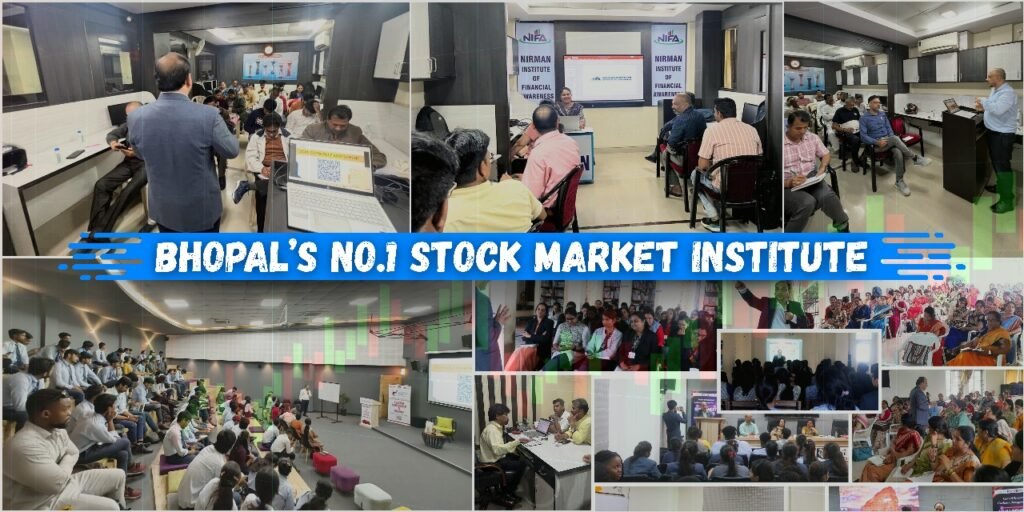
Nirman Institute is recognized as India’s trusted stock market training institute because of its practical-first, career-oriented approach.
What Makes Nirman Institute Different?
✔ Practical training with live market exposure
✔ Mentorship from experienced traders
✔ Structured equity market courses
✔ Focus on discipline & risk management
✔ Career-oriented stock market education
Many learners join with confusion and fear—but leave with clarity, confidence, and a professional mindset.
Don’t Be in the 90%
If you want to:
Stop guessing in the market
Build a reliable trading strategy
Develop discipline and confidence
Create a real career in stock market trading
Then practical training is not optional—it is essential.
👉 Learn from live markets
👉 Trade with discipline
👉 Grow with confidence
Begin your professional trading journey with Nirman Institute—where education meets real market experience.
Frequently Asked Questions (FAQs)
1. Is it true that 90% traders fail?
Yes. Most traders fail due to lack of education, discipline, and risk management—not because the market is unfair.
2. Can practical training really improve success?
Absolutely. Practical training helps traders develop real skills, emotional control, and strategy discipline.
3. Is stock trading a good career in India?
Yes, if approached professionally with proper education and guidance.
4. How long does it take to become consistent?
Most traders start gaining consistency within 6–12 months of disciplined practice.
5. Why choose Nirman Institute?
For practical training, live market exposure, mentorship, and career-focused stock market education.