Trading Psychology
The Market Doesn’t Beat You—Your Mind Does
Every trader enters the stock market with dreams of success.
But only a small percentage achieve it.
Why?
Not because they lack knowledge…
Not because they lack strategy…
Not because they lack indicators…
But because they lack psychological discipline.
The truth is simple yet powerful:
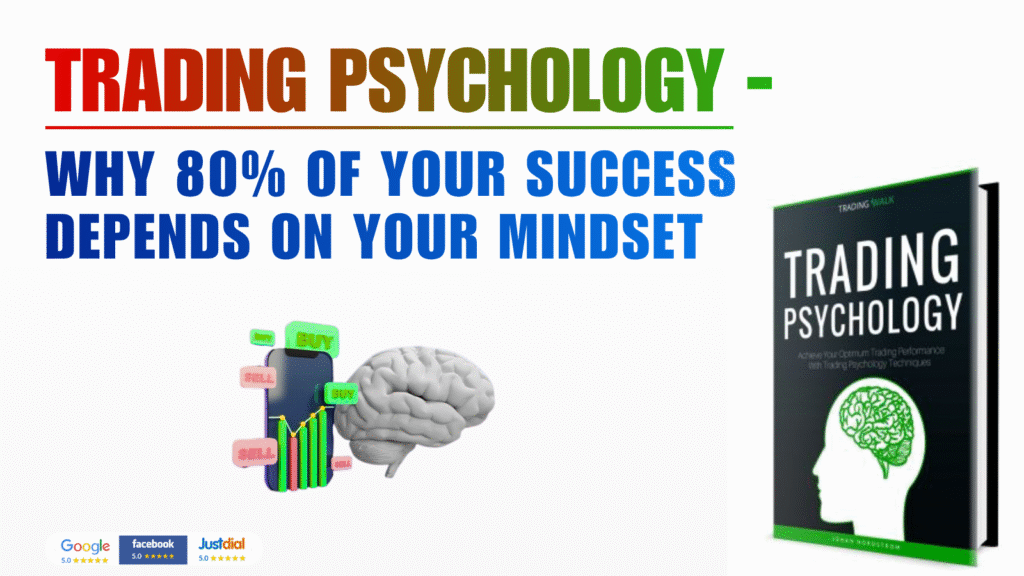
Trading is 20% strategy and 80% psychology.
Strategies give direction.
Psychology ensures execution.
At NIFA, after training thousands of traders, we’ve observed one pattern:
✔ Successful traders control their mindset
❌ Unsuccessful traders get controlled by their emotions
In this blog, you will discover why 80% of your success in trading depends entirely on your mind, and how you can build a mindset that turns you into a confident, consistent, and disciplined trader.
What Is Trading Psychology?
Trading psychology refers to the:
Emotions
Thoughts
Reactions
Mental habits
Discipline
Confidence
…that influence how you behave in the market.
It controls the most important decisions:
✔ When to enter
✔ When to exit
✔ When to stop
✔ When to wait
✔ When to avoid trading
Even the world’s best strategy will fail if your mind is not strong enough to follow it.

Why 80% of Your Trading Success Comes from Psychology
Let’s understand the psychological factors that make or break traders.
⭐ 1. Fear — The Silent Account Killer
Fear makes you:
Exit too early
Skip winning trades
Avoid opportunities
Doubt your analysis
Panic during volatile moves
Fear prevents you from following your trading plan.
Example:
Your chart says BUY, but your mind says “What if it falls?”.
This is where traders lose performance.
⭐ 2. Greed — The Most Dangerous Emotion in Trading
Greed makes you:
Chase trades
Overtrade
Add too many positions
Ignore stop-loss
Hold losers too long
Risk too much for quick gains
Greed destroys accounts faster than losses.
At NIFA, we teach:
“Take what the market gives you, not what you want from it.”
⭐ 3. FOMO — Fear of Missing Out
Market goes up and you jump in late.
Market dumps and you panic sell.
This is FOMO, one of the biggest emotional traps.
FOMO traders trade emotionally → not logically.
⭐ 4. Impatience — The Death of Discipline
The market rewards:
Patience
Timing
Waiting for the right setup
But impatience makes traders:
Enter early
Exit early
Overtrade
Break rules
The best traders trade LESS, but trade SMARTER.
⭐ 5. Overconfidence — The Hidden Risk
After a few wins, beginners feel invincible.
This leads to:
Larger positions
Ignoring stop-loss
Trading without confirmation
Risking too much
Overconfidence leads to wipeouts.
The market humbles everyone who stops respecting it.
⭐ 6. Revenge Trading — The Fastest Way to Blow an Account
You lose money → You get emotional → You try to win it back → You take bad trades.
This creates a spiral of losses.
Revenge trading kills more traders than bad strategies.
⭐ 7. Lack of Consistency & Discipline
Every trader knows what to do.
Only the disciplined ones actually DO it.
Discipline ensures:
✔ You follow your stop-loss
✔ You avoid emotional trades
✔ You stick to your plan
✔ You size your positions correctly
✔ You avoid overtrading
Without discipline → no strategy can save you.
Real Reason Why 90% Traders Lose Money
Not poor strategy.
Not bad indicators.
Not wrong charts.
It’s emotional decisions.
You lose because you:
❌ Exit early
❌ Enter late
❌ Overtrade
❌ Ignore rules
❌ Let emotions control your actions
This is why psychology matters more than knowledge.
How to Build a Strong Trader Mindset (NIFA’s 7-Step Formula)
These are the same psychological rules NIFA teaches in its live market training programs.
1️⃣ Create a Trading Plan (Your Mind Needs Structure)
Before you trade, you must know:
✔ Entry
✔ Stop-loss
✔ Target
✔ Risk
✔ Quantity
A defined plan reduces emotional decisions.
2️⃣ Use Strict Stop-Loss (Your Emotional Seatbelt)
Stop-loss protects you from:
Panic
Big losses
Emotional damage
Strict stop-loss = emotional safety.
3️⃣ Follow a Fixed Risk Per Trade
Professional traders risk only 1–2% per trade.
This keeps emotions under control.
4️⃣ Avoid Trading During Emotional Stress
Never trade when feeling:
❌ Angry
❌ Excited
❌ Fearful
❌ Tensed
❌ Exhausted
A stable mind = stable trading.
5️⃣ Journal Your Trades (The Mind Learns Through Reflection)
Writing helps you understand:
Why you won
Why you lost
How emotions affected decisions
A trading journal is a psychological mirror.
6️⃣ Trade Only High-Quality Setups
More trades ≠ more profits
Better trades = more profits
Quality improves confidence.
7️⃣ Practice Meditation or Mind Calming Techniques
Calm mind → Calm trading
Calm trading → Better decisions
Even 5–10 minutes a day helps your psychology immensely.
Why NIFA Focuses on Trading Psychology in Every Course
Most beginners only learn charts.
At NIFA, we teach:
✔ Charts
✔ Strategies
✔ Live market execution
✔ Position sizing
✔ Risk management
✔ Trading psychology (the real winning factor)
Because we know:
A strong strategy helps you enter the market.
A strong mindset helps you stay and win in the market.
This is why NIFA-trained traders show:
Better discipline
Improved consistency
Lower emotional mistakes
Higher long-term performance
We don’t just create traders—
we create mentally strong traders.
The Mindset of Successful Traders (NIFA’s Core Lessons)
Successful traders have:
✔ Patience
✔ Logic
✔ Calmness
✔ Confidence
✔ Self-control
✔ Rule-based trading
✔ Zero emotional reactions
They understand that:
The market does not owe you anything.
You only get what your discipline allows.
Conclusion: Control Your Mind, Control Your Trades
You can master:
✔ Technical analysis
✔ Chart patterns
✔ Indicators
✔ Strategies
But without psychological mastery,
your trading journey will always feel unstable.
If you want to be in the successful 20%,
you must strengthen the 80% that truly matters:
👉 Your Mindset
👉 Your Discipline
👉 Your Emotional Control
This is the true secret of the stock market.
📞 Start Your Trading Psychology Journey with NIFA
🌐 www.nifa.co.in
📞 Call / WhatsApp: +91-97 5555 3333
📧Join Free Demo Class
NIFA — Learn. Trade. Grow.
Become the trader your mind is capable of becoming.